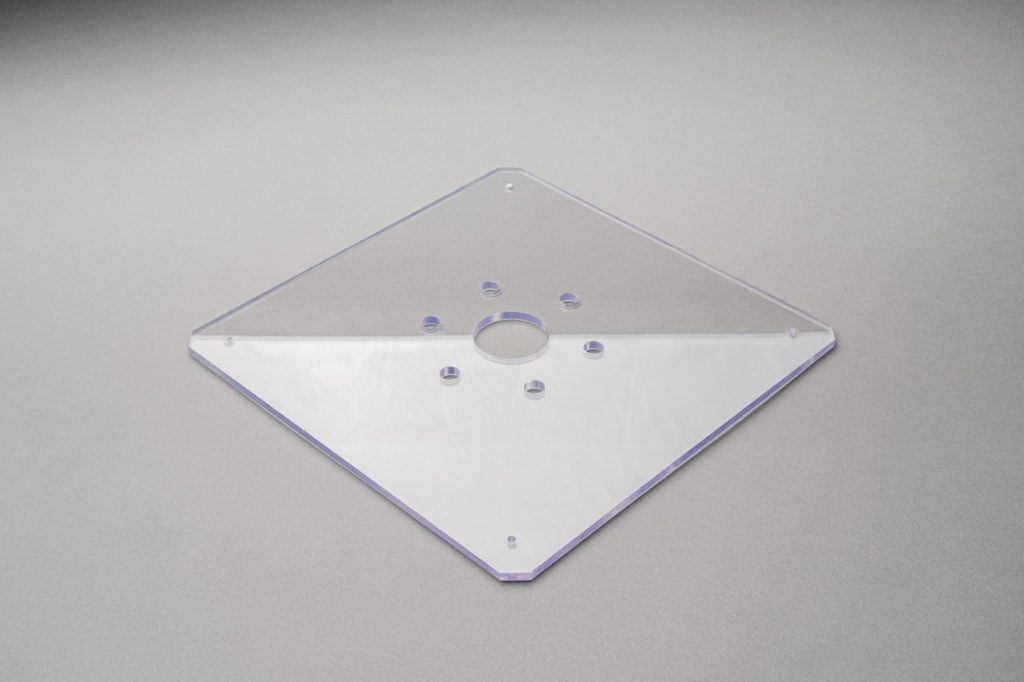
Plastic plates are widely used in various industries due to their lightweight, versatility, and cost-effectiveness. To further enhance their functionality, two important features—tapped holes and threaded insert holes—are now available in sheet metal fabrication services. These new options open up possibilities for plastic plates to be utilised in more demanding applications, such as equipment covers, partitions, and lightweight structural components, where precise fastening solutions are required.
Both tapped holes and threaded insert holes provide convenient methods for attaching fasteners to plastic plates, offering durability, ease of assembly, and reliability. Understanding the difference between these two features and their applications will help you choose the right option for your project.
What Are Tapped Holes?
A tapped hole is a pre-drilled hole that has been threaded to allow a screw or bolt to be securely fastened into it. In plastic plates, tapped holes are particularly useful for lightweight and medium-duty applications where direct threading into the material is sufficient to hold components together.
Tapped holes are advantageous because they eliminate the need for additional components like nuts or inserts, streamlining the assembly process and reducing the overall cost of the design. However, because plastic is a softer material, the threads created within the tapped hole may wear out over time if subjected to frequent use or high torque. This makes tapped holes ideal for applications where fasteners will not need to be repeatedly removed or tightened.
What Are Threaded Insert Holes?
A threaded insert hole is a pre-drilled hole designed to accommodate a threaded insert (threaded bushing), which is typically made of a harder material such as stainless steel. The threaded insert is installed into the plastic plate, creating a reinforced threaded surface that can withstand repeated fastening and unfastening without degrading the material.
Threaded insert holes are particularly beneficial for applications where durability and longevity are critical. For example, in industrial equipment or machinery that requires regular maintenance, the use of threaded inserts ensures that the fastening points remain reliable and secure over time.
Additionally, threaded inserts provide greater resistance to torque and shear forces compared to tapped holes, making them suitable for high-stress environments.
By offering both tapped holes and threaded insert holes, sheet metal fabrication services empower designers to customise plastic plates for a wide range of applications, balancing cost, durability, and performance. Whether you need a simple fastening solution or a robust option for high-frequency use, these features provide the flexibility you need for your projects.
 English
 Français
 Español
 Italiano
 Polski