Deutsch
 Français
 Español
 Italiano
 Polski
BLOG » How meviy v3 is Redefining “Zero-Touch” manufacturing
How meviy v3 is Redefining “Zero-Touch” manufacturing
The scheduled March 2026 release marks a decisive pivot in meviy’s trajectory, moving the platform from a manual configuration interface towards a more autonomous, CAD-integrated procurement ecosystem.
This shift sits at the centre of the “zero-touch” manufacturing model, which aims to compress the industrial supply chain by removing human intervention from the critical path.
By directly targeting the “high-friction interval” – the latent period between initial model upload and price finalisation — the v3 update tackles the remaining barriers to true procurement velocity.
This is not simply an incremental software update. It represents a strategic realignment that addresses a primary bottleneck in digital manufacturing: manual tolerance entry.
The friction in legacy workflows
To maintain competitive velocity in modern engineering, procurement needs to match the speed of the design cycle. Identifying and removing “legacy friction” is an imperative for organisations looking to reduce Total Cost of Acquisition (TCOA). In today’s environment, the need for engineers to manually specify tolerances for every precision feature remains a material drain on high-value time and expertise.
The table below contrasts the traditional manual approach with the automated logic introduced in the v3 update:
| Feature | Manual configuration (pre-v3 meviy release) | Automated Logic (v3 update from meviy) |
|---|---|---|
| Workflow entry | Users must manually navigate and define every precision hole. | “Zero-touch” logic triggers automatically upon CAD upload. |
| Data source | Manual entry required based on external specifications. | Automated assignment driven by pre-configured CAD attributes. |
| Procurement latency | High; administrative burden scales with part complexity. | Minimal; batch processing ensures immediate quotation velocity. |
This update shifts meviy from a quoting tool to a more advanced decision-support engine. By removing the tolerance entry hurdle, the platform reduces non-value-added administrative time in procurement and enables engineering teams to refocus on core design work. This move towards automation rests on a robust technical recognition framework.
Recognition logic and user control
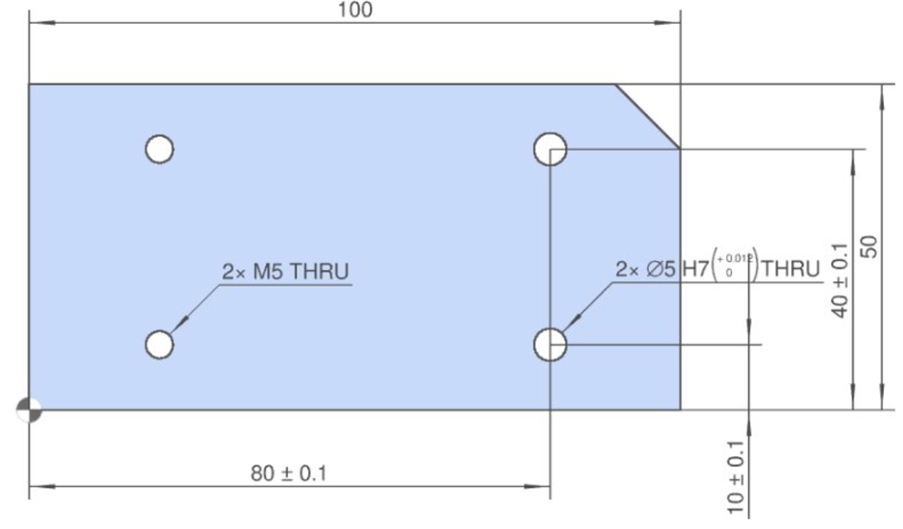
The v3 engine runs a comprehensive scan of the uploaded CAD model. It identifies high-precision features using defined colour attributes and hole-type linkage data. It then adds positional dimensions and tolerances from the origin to holes after upload.
User Control States
To give users control over their preferred “zero-touch” experience, the “Quotation Settings for Machined Plate” menu in the user profile now offers three selectable states:
- None: No automatic batch changes are applied, maintaining manual control.
- Set tolerances: pre-selected tolerance values are automatically applied to all identified precision holes.
- Add dimensions only: positional dimensions are generated relative to the origin, without applying specific tolerance values.
However, for the engine to run at peak efficiency, it must operate within defined performance parameters.
High-density plates and CAD integration
A core objective of this release is to drive “software synergy” by rewarding power users who keep disciplined CAD standards. By targeting specific workflows, meviy also encourages more robust internal design protocols through advanced attribute tagging.
- Quantifiable time savings: for iCAD and SolidWorks power users, a “one-click” quotation experience becomes realistic. On high-density plates, automation removes a meaningful amount of manual entry and speeds up quotation.
- Internal QC and documentation synergy: the benefits extend into internal Quality Control. Users can generate a DXF after issuing the part number to support internal documentation and inspection.
Standardising for the autonomous future
The March 2026 update delivers a major convenience lift by removing key friction points in the procurement cycle. By automating tolerances and dimensions, meviy also encourages adoption of advanced CAD practices such as colour attribute tagging and hole-type linkage.
Strategically, this acts as a catalyst for standardising internal engineering protocols. It supports more disciplined CAD data management and aligns design standards with a move towards more automated manufacturing.
FAQ
1) What does the v3 update automate after I upload my CAD?
It automatically adds positional dimensions and tolerances from the origin to precision holes, reducing the need for manual tolerance entry.
2) How does meviy recognise which holes count as “precision holes”?
The system identifies precision holes based on CAD colour attribute linkage and hole-type linkage in your model.
3) Can I keep manual control instead of using automation?
Yes. In User settings > “Automatic addition of dimensions and tolerances”, you can choose None, Set tolerances, or Add dimensions as your default.