Deutsch
 Français
 Español
 Italiano
 Polski
BLOG » Understanding deburring: techniques and importance
Understanding deburring: techniques and importance
Deburring is a vital finishing step in metalworking and manufacturing, removing sharp edges and residual material left after cutting, drilling, milling or stamping. Done well, it improves safety, function and appearance, ensuring parts fit accurately and perform reliably. This guide explains what deburring is, why it matters, and how to select and apply the most suitable methods—manual or with a deburring machine—for your parts and processes.
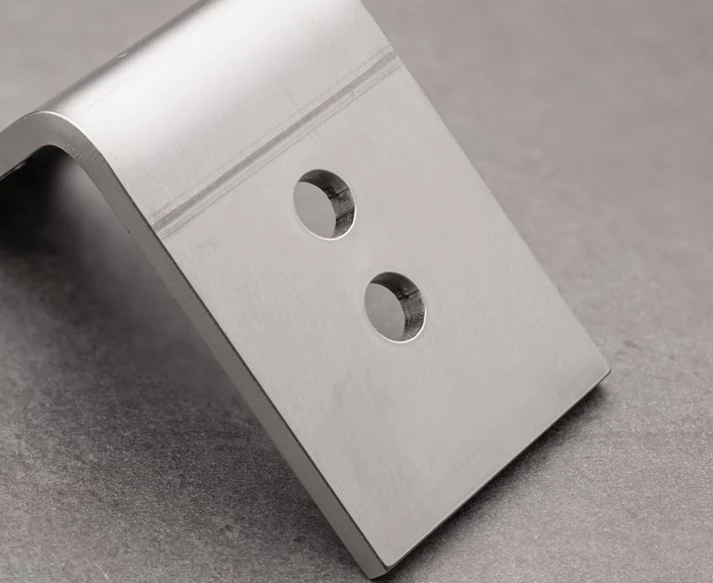
What is deburring?
Deburring is the removal of burrs—unwanted raised edges, sharp fragments or small bits of residual material—from a workpiece after machining or fabrication. These imperfections commonly form where cutting tools exit the material or where shear and heat distort the edge. In practice, deburring often includes edge breaking and edge rounding to reach the specified edge condition.
Typical causes include tool wear, incorrect feeds and speeds, poor support or clamping, material ductility (soft, gummy alloys tend to smear), thermal effects from laser cutting, and breakthrough during drilling or punching. Processes such as milling, turning, sawing, laser and plasma cutting and punching frequently leave burrs of varying size and shape that require consistent deburring.
Deburring may be manual or automated and often includes edge breaking, edge rounding, surface smoothing and removal of secondary burrs created during finishing. The objective is a consistent, safe and specification-compliant edge condition without compromising tolerances or surface finish. Selecting the right deburring machine or manual tool is key to achieving this outcome.
Why remove burrs?
Burrs degrade product quality, safety and process efficiency. If left in place, they can interfere with assembly, create dimensional variation at mating edges, disrupt sealing surfaces and increase wear in moving assemblies. They also trap contaminants, compromise coatings and contribute to premature failure. Systematic deburring minimises these risks.
From a safety perspective, sharp edges present cut hazards to operators and end users. In electronics, burrs can cause shorts; in fluid systems, they can shed metallic debris. In sheet work, sheet metal edge breaking improves handling safety during downstream operations.
Effective deburring offers multiple benefits:
- Improved fit and function across assemblies.
- Better fatigue performance through reduced stress risers.
- Enhanced surface preparation for painting, plating or anodising.
- Higher perceived quality and more consistent aesthetics.
- Faster, smoother assembly with fewer rework steps.
In regulated sectors such as medical devices, aerospace and automotive, defined edge quality is often a formal compliance requirement, and the use of a suitable metal deburring machine or controlled manual process helps demonstrate conformity.
Methods and tools for deburring
Deburring approaches fall into two broad categories: manual and machine-based. Manual deburring relies on handheld tools to scrape, cut, sand or brush edges. Machine deburring uses dedicated equipment to process parts consistently at higher throughput and with tighter control.
Manual methods include hand scrapers, deburring blades, countersink tools, files, abrasive pads, and rotary tools with mounted points or small abrasive wheels. These are well suited to prototypes, small batches, intricate features and tight access areas where tactile control is valuable, particularly for precise edge breaking.
Machine-based methods include abrasive belt or brush machines, vibratory tumblers, centrifugal disc and barrel finishers, spindle-driven brush heads, shot blasting, thermal deburring (TEM), electrochemical deburring (ECD) and robotic deburring cells. These solutions are ideal for repeatable volumes and when uniform edge quality is required. A metal deburring machine can standardise parameters for consistency, while robotic deburring can follow complex toolpaths repeatedly.
When choosing tools and methods, consider:
- Material: aluminium, steel, stainless steel, titanium, plastics and their specific behaviours. For example, deburring aluminum requires softer abrasives and careful heat control.
- Burr size and morphology: feathered, roll-over, breakout and their removal difficulty.
- Geometry and access: flat parts, internal passages, intersecting holes or complex 3D shapes.
- Surface finish and tolerance requirements: target roughness and allowable edge break.
- Production volume and repeatability needs: low-volume flexibility versus high-volume consistency.
- Downstream processes: coating, plating or anodising may require a specific edge radius.
- Operational factors: tool life, consumable cost, dust or swarf extraction, coolant compatibility and ergonomics.
In addition, assess whether sheet metal edge breaking should be completed in-line after cutting, and whether a deburring machine with brush heads or a robotic deburring station will best meet cycle time targets.
Types of deburring machines
Different machine types address different part sizes, materials and edge conditions. The table below summarises common options and typical applications. Selecting the right deburring machine ensures consistent results and protects critical dimensions.
| Machine Type | How It Works | Best For | Key Advantages |
|---|---|---|---|
| Abrasive belt/brush machines | Convey parts under belts and rotary brushes to remove burrs and apply a controlled edge radius. | Laser-cut and punched sheet, flat parts; sheet metal edge breaking at scale. | High throughput, uniform edge quality, adjustable aggressiveness. |
| Vibratory tumblers & barrel finishers | Use media and compound to gently abrade edges in batch processing. | Batches of small parts requiring general edge smoothing and surface uniformity. | Cost-effective for volume, scalable, simultaneous processing. |
| Centrifugal disc / centrifugal barrel | High-energy mass finishing with intensified media action. | Small to medium components needing faster cycles and finer finishes. | Short cycle times, excellent finishing quality. |
| Thermal deburring (TEM) | Controlled combustion removes internal and external burrs. | Manifolds, intersecting holes, complex internal passages. | Accesses hidden edges, fast and thorough; ideal where other processes cannot reach. |
| Electrochemical deburring (ECD) | Anodic dissolution removes burrs at precise locations. | Hard-to-reach internal edges with tight dimensional control. | Selective, minimal impact on base dimensions. |
| Robotic deburring cells | Multi-axis robots drive abrasive tools or brushes along programmed paths. | Complex 3D geometries and repeatable volumes. | Consistency, flexibility, integration with automation; scalable robotic deburring strategies. |
When selecting machinery, consider part geometry, throughput, required edge radius, integration with upstream/downstream processes, floor space, consumables, maintenance requirements and environmental controls for dust and swarf. For high-mix sheet work, a versatile metal deburring machine with quick changeovers may outperform dedicated systems.
Deburring in metal fabrication
In fabrication, deburring is integral to producing safe, accurate and visually clean parts. After cutting, forming and machining, edges often need conditioning before parts move to bending, welding, coating or assembly. Consistent sheet metal edge breaking improves ergonomics and reduces injury risk during handling.
Processes that commonly require deburring include:
- Laser and plasma cutting: heat-affected edges and slag.
- Punching and stamping: roll-over and breakout burrs.
- Sawing: feathered edges that snag or cut.
- Milling and turning: exit burrs on shoulders and edges.
- Drilling: entrance and exit burrs, particularly on thin stock.
- Tapping: thread nodules that hinder assembly.
- Waterjet cutting: minor edge roughness requiring light edge break.
To optimise deburring in fabrication:
- Standardise edge quality specifications at the drawing stage, e.g. maximum burr height and target edge radius, with clear callouts for edge breaking on all accessible edges.
- Use fixturing or magnetic tables to stabilise parts during machine deburring.
- Sequence operations to minimise rework; deburr after cutting but before forming if edges may become inaccessible.
- Match media and abrasives to the material to avoid contamination, especially for stainless steel and aluminium; when deburring aluminum, avoid ferrous contamination and excessive heat.
- Implement in-line inspection for burr height and edge condition to maintain consistency.
For internal passages or intersecting holes, thermal deburring can remove residuals that mechanical tools cannot reach. Where complex profiles recur, robotic deburring offers repeatability with reduced operator variation.
Tips for effective deburring
Adopting best practices helps achieve reliable, efficient and repeatable results:
- Specify edges clearly: use callouts such as “break edge 0.2–0.4 mm” or reference applicable standards to define acceptance criteria for edge breaking and rounding.
- Control upstream variables: sharp tools, correct feeds/speeds and proper support reduce burr formation and shorten deburring time.
- Match method to the part: manual tools for low volume and intricate features; a deburring machine, metal deburring machine or mass finishing for consistent, high-volume throughput.
- Verify results: measure burr height and edge radius using microscopes, profilometers or edge gauges; document parameters for traceability.
- Maintain tools and media: replace worn abrasives, condition brushes and refresh media to sustain performance.
Avoid common mistakes:
- Over-deburring that alters dimensions or creates excessive edge radius.
- Using the wrong abrasive grade and causing scratches or unwanted texture.
- Cross-contamination between ferrous and non-ferrous materials leading to corrosion issues. This is especially important when deburring aluminum and stainless steel on shared equipment.
- Neglecting dust extraction or coolant management, which affects quality and safety.
To improve efficiency, integrate deburring with conveyors or robots, standardise fixtures for quick changeovers, and use timers or sensors to detect end-of-cycle conditions in mass finishing. Where appropriate, incorporate robotic deburring into the cell to automate edge conditioning on complex profiles.
Edge Breaking Deburring with meviy
For sheet metal components, edge breaking is a controlled deburring process used to remove sharp punch or cut edges and improve handling safety without significantly altering part geometry. With meviy, sheet metal edge breaking is performed using a double-sided deburring machine, producing a consistent equivalent edge radius of approximately R0.1 mm under standard conditions. Burr height is guaranteed to be 0.1 mm or less, ensuring compliance with typical fabrication safety and quality requirements while maintaining dimensional integrity. This process is particularly effective for laser-cut and punched parts, where roll-over and breakout burrs are common. Engineers should note that minor surface scratches may occur due to the abrasive nature of machine deburring, and that edge breaking and engraving cannot be specified on the same model, as the edge conditioning process may soften engraved features. Transparent resin sheet parts receive edge breaking as standard. Where sharper internal corners or tighter edge conditions are required—such as radii below R3—these must be specified separately, as standard machining applies a minimum internal radius to ensure manufacturability and consistency.
Frequently Asked Questions
What is the difference between deburring and edge rounding?
Deburring removes protruding material to create a safe, clean edge, while edge rounding intentionally applies a controlled radius to improve fatigue life, coating adhesion and handling comfort. Many processes can achieve both by selecting suitable abrasives and dwell time, and by adding a light edge breaking step first.
How do I choose between manual and machine deburring?
Consider batch size, repeatability requirements, part complexity and cost. Manual methods are flexible and economical for small runs or tight features. Machine deburring offers consistency and speed for production volumes, especially for flat parts or repeat geometries. A metal deburring machine with programmable settings can standardise results across shifts.
What tolerance impact should I expect?
Properly controlled deburring should not change critical dimensions. However, aggressive methods or long cycle times can remove more material than intended. Protect critical edges, use masking in mass finishing, and specify edge-break limits on drawings to avoid nonconformance.
Is deburring necessary for non-metal materials?
Yes. Plastics and composites can form fibrils or fuzz that hinder assembly and appearance. Use plastics-safe abrasives and lower energy processes to avoid heat damage or deformation.
How can I reduce burr formation upstream?
Keep tools sharp, optimise feeds and speeds, minimise tool exit angles that promote roll-over, use backing material for drilling thin stock, and consider alternative processes such as fine blanking to produce cleaner edges. Reducing burr size lowers the load on any downstream deburring machine.
What is meviy
meviy is an AI-powered on-demand manufacturing platform from MISUMI. Engineers can upload 3D CAD models to receive instant quotations, manufacturability checks, and lead time estimates. The platform delivers bespoke components to exact specifications across CNC milling, CNC Turning and Sheet Metals. With no minimum order quantity, teams can order from a single part upwards. By streamlining procurement and accelerating product development, meviy enables engineers to bring designs to life faster. Its AI also supports part recognition, interactive design editing, and compatibility with a wide range of materials – making it a smart and reliable tool for modern product development. Backed by MISUMI’s quality standards, customers can expect consistent precision with every order.