Deutsch
 Français
 Español
 Italiano
 Polski
BLOG » From edge breaking to chamfering: how meviy standardises edge quality for steel parts
From edge breaking to chamfering: how meviy standardises edge quality for steel parts
The upcoming release in March 2026 represents a pivotal step in the evolution of the meviy manufacturing platform. By synchronising digital specifications directly with physical factory outputs, this update—meviy Powered by MISUMI—aims to eliminate the “last mile” of manual production variance. This is the stage where a digital model historically required human intervention to reach its final, functional state.
The core objective of the Chamfer & Radius (C/R) Expansion is to enable finished-quality edge geometry within a fully digital ecosystem. This ensures that the tactile and aesthetic requirements of a part are captured at the point of design, rather than being treated as an afterthought during post-processing.
This transition from traditional “Edge Breaking” to defined “Chamfering” addresses specific operational challenges where digital-to-physical handovers have historically left gaps in final part finishing.
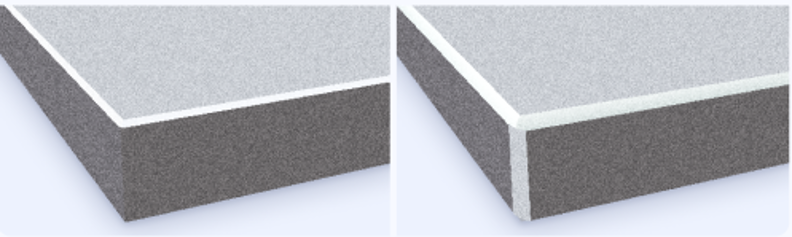
The hidden costs of ad-hoc edge finishing
In high-precision or appearance-sensitive engineering environments, traditional “edge breaking” often falls short of professional requirements. Historically, customers relied on basic deburring to ensure parts were safe to handle, but this industrial-grade approach rarely provided the definition required for high-end machinery or consumer-facing components.
Previous workflows forced a choice between accepting basic deburring or performing manual finishing once the parts arrived. This manual intervention introduces significant variability; two parts from the same batch could have different edge profiles based on the individual technician’s work. Furthermore, this adds hidden internal costs and labour time that are often not accounted for during the initial procurement phase.
The “So What?”: When engineers are forced to perform ad-hoc manual finishing after a part arrives, it disrupts the entire efficiency of the digital procurement cycle. What was intended to be a “ready-to-use” component becomes a work-in-progress, negating the speed advantages of automated manufacturing.
The C/R Expansion provides a selectable, repeatable digital alternative to this manual labour, ensuring that edge geometry is defined and validated before the first cut is made.
The C/R expansion framework
The following table outlines the transition from legacy edge breaking to the new C/R Expansion options:
| Feature | Standard Edge Breaking (Legacy) | C/R Expansion (New Option) |
|---|---|---|
| Outer Perimeter Finish | No burrs > 0.1mm | R0.2 or greater (equivalent to R0.3) |
| Corner Finish | As per the 3D model | Automated C1 Chamfer (Overrides 3D model corners) |
| Tactile Quality | Basic deburring (Industrial) | “No sharp edges” (Actual R0.2+ with 0.1R equivalent feel) |
Strategic constraint: it is important to note that these enhanced C/R options are currently supported for Steel and Stainless Steel only.
By formalising these specifications within the user interface, meviy allows for a defined, repeatable manufacturing instruction that is synchronised across the entire production chain.
The 3D viewer as the single source of truth
Transparency in engineering procurement is vital for reducing errors. The meviy platform has updated its UI/UX to reflect these changes within the “Basic Information” panel and the 3D Viewer. By making these selections visible during the configuration stage, the 3D Viewer acts as the single source of truth for edge geometry, ensuring the physical output matches the digital intent.
The integration extends beyond the screen; the inclusion of specific C/R instructions in system-generated simple 2D drawings acts as a catalyst for manufacturing precision. Because these instructions—including the automated C1 corner override—are embedded into the manufacturing guidance, the factory floor receives a validated deburring process. This removes the risk of human misinterpretation at the machine level and ensures the physical part matches the digital model perfectly.
Strategic business impact and ROI
For procurement and production managers, these technical updates translate into critical business improvements. By moving edge specification into the digital workflow, companies can realise a tangible return on investment through several channels:
- Reduction in Internal Overhead: by specifying R0.2 or C1 requirements upfront, organisations can effectively remove manual deburring steps from their internal production chain. This frees up skilled labour for more complex assembly and value-added tasks.
- Enhanced Ergonomics and Safety: standardising a “no sharp edges” policy improves the handling feel of components. This is essential for safety-relevant handling during assembly, maintenance, or frequent changeovers.
- Batch Consistency: standardised selection ensures quality parity across multiple production runs. Whether ordering five parts or fifty, the edge geometry remains consistent, protecting the perceived build quality and professional finish of the final product.
This update is a direct result of customer feedback being translated into a selectable feature. By bridging the gap between digital design and finished physical geometry, meviy—backed by the industrial heritage of MISUMI—has strengthened its end-to-end digital offer. This release ensures that the consistency promised by digital manufacturing is finally applied to the very edges of the physical part, setting a new standard for digital-to-physical manufacturing consistency.
FAQ
FAQ 1: Which materials support the new C/R expansion options?
meviy supports the enhanced C/R options for Steel and Stainless Steel.
If you select other materials, you will not see these C/R expansion choices.
FAQ 2: How do I confirm what the factory will produce?
Use the 3D Viewer and the “Basic Information” panel as your reference.
meviy shows your selected edge treatment in the viewer, and it includes the instruction in the system-generated simple 2D drawing.